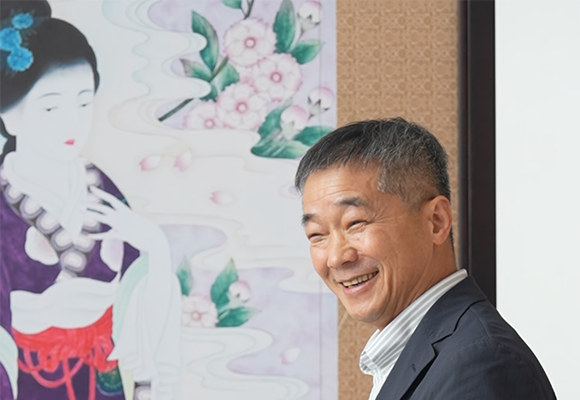
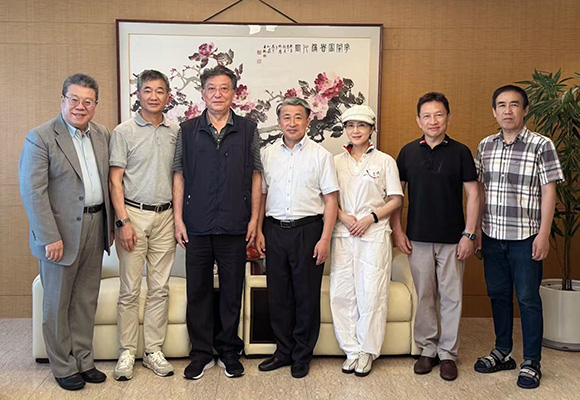
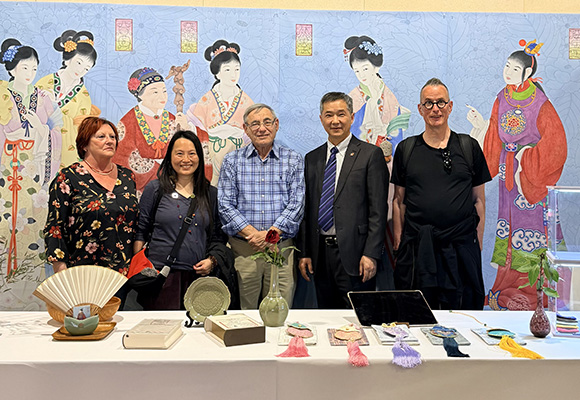
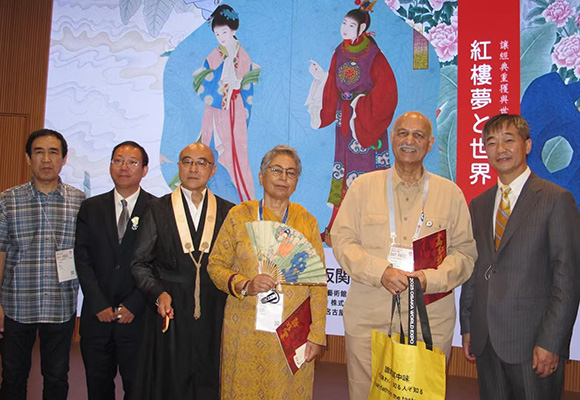
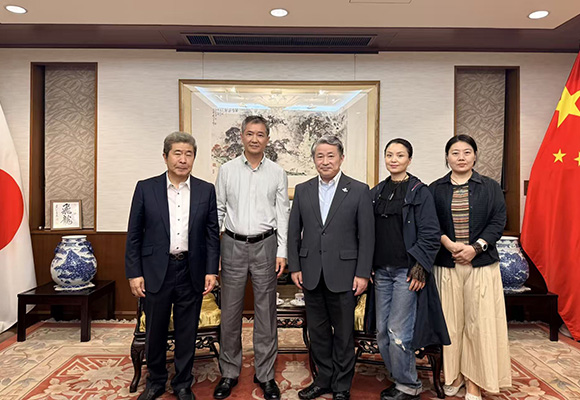
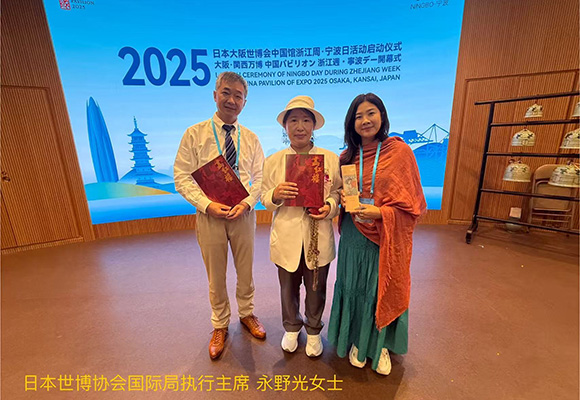
Brief introduction to the planner and producer of the new Dream of Red Mansions, Hu Haiping, China.
A native of Ningbo, director of the Hushan Art Museum.
Chairman of the Japanese Art Association of Dream of Red Mansions, the new work "Dream of Red Mansions".
The planner, producer and collector of a series of heavy-duty, heavy-color ink and wash paintings. He was born in 1964.
He started out as an entrepreneur and once ran an art museum in Kyoto.In 2016, he returned to his hometown to build the "Hushan Art Museum".
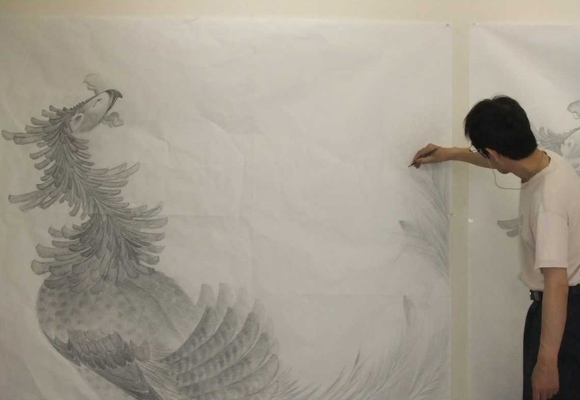
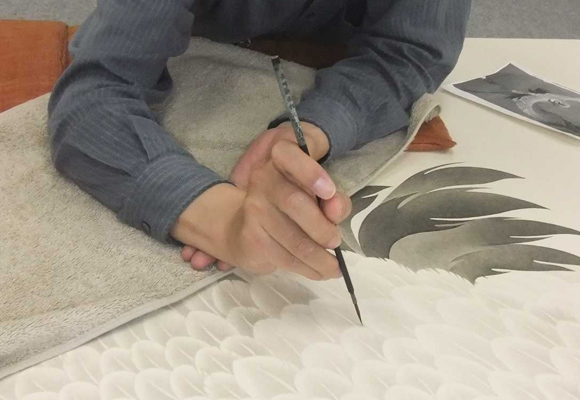
At the same time, he plans to work with his old friend Huang Zhi, a native of Qidong, Jiangsu, to re-create no less than 100 paintings with the goal of national cultural assets, current and future aesthetics, and a healthy and upward image, 50 of which are 2-meter-high, life-size series of Dream of Red Mansions paintings as the theme of the art museum!
Introduction to the painter Huang Zhi As a work with the meaning of life, the painter devoted all his efforts to create a world-class famous painting!
Born in Qidong City, Jiangsu Province, China in 1964.
Graduated from the Fine Arts Department of Suzhou Institute of Silk Technology (now the School of Fine Arts of Suzhou University) in 1984.
In 1985, he served as a lecturer at the Beijing Institute of Fashion Technology.
In 1986, the school emblem designed for the Beijing Institute of Fashion Technology was adopted.
In 1988, his fashion work won the prize in the World Youth Fashion Design Competition, and he was invited to Switzerland for academic exchanges and art inspections.
In 1992, he traveled east to Japan and studied at the Graduate School of Fine Arts, Kyoto Municipal University of the Arts.
1994 "Huang Zhi's Painting Exhibition" was held in Japan's Long-term Credit Bank Gallery in 1995.
In 1995, he was invited to hold a professional painter's exhibition at Hamafaze Art Co., Ltd. in Japan.
In 1996, he completed the 8-sided screen "Wind, Flowers, Sun, and Moon", which was collected by "Liujiang Co., Ltd." in Japan.
In 1998, he completed the "Cloud Dragon Picture" large standing screen, which was collected by "Eitokuji Temple" in Japan.
2000 In 2001 and 2002, the decorative patterns and paintings were produced by Japan's "Filio" Design Institute.
In 2004, the ink works such as "Lotus", "Peony", "Grape", "Dragon and Tiger" were collected by the Japanese Ancient Split Society.
In 2004, the six golden screen "Lotus and Human Body Concerto" ink works were collected by the Kamakura Museum of Art in Japan.
2005 In 2006, he became a paid lifelong professional painter for the "Shuhai Zang" Art Club of Japan.
In 2006, the two-piece screen "Tiger" ink painting was collected by the Japanese Fuchai Society.
In 2006, the "Carp" special collection was auctioned for the first time at the Japanese Art Auction, which was a great success.
In 2007, the Japanese "Shuhai Zang" Art Club began to monitor Huang Zhi's art works and was designated as not for sale in Japan.
In 2007, the ink painting "Condor" 6 The two-curved screen was collected by the Japan Koseikai and the Kamakura Museum of Art.
In 2007, a four-person exhibition "The Power of Ink" was held at the Kyoto City Museum of Art in Japan.
In 2008, the ink "Tiger" large standing screen was collected by the famous "Ikkyuji Temple" in Japan.
In 2008, the "Demon Girl" 6 was collected by the Japan Koseikai.
In 2008, the "Buddhist Painting" color was collected by the Saidaiji Temple, the oldest temple in Japan.
In 2009, the ink "Lian Duli" 6 Quda screen production was acquired by the Entoku-in Temple of Kodaiji Temple in Japan
